
Wilmington, North Carolina · An undergraduate coastal college
Inquiry at the water’s edgeWilmington · North Carolina
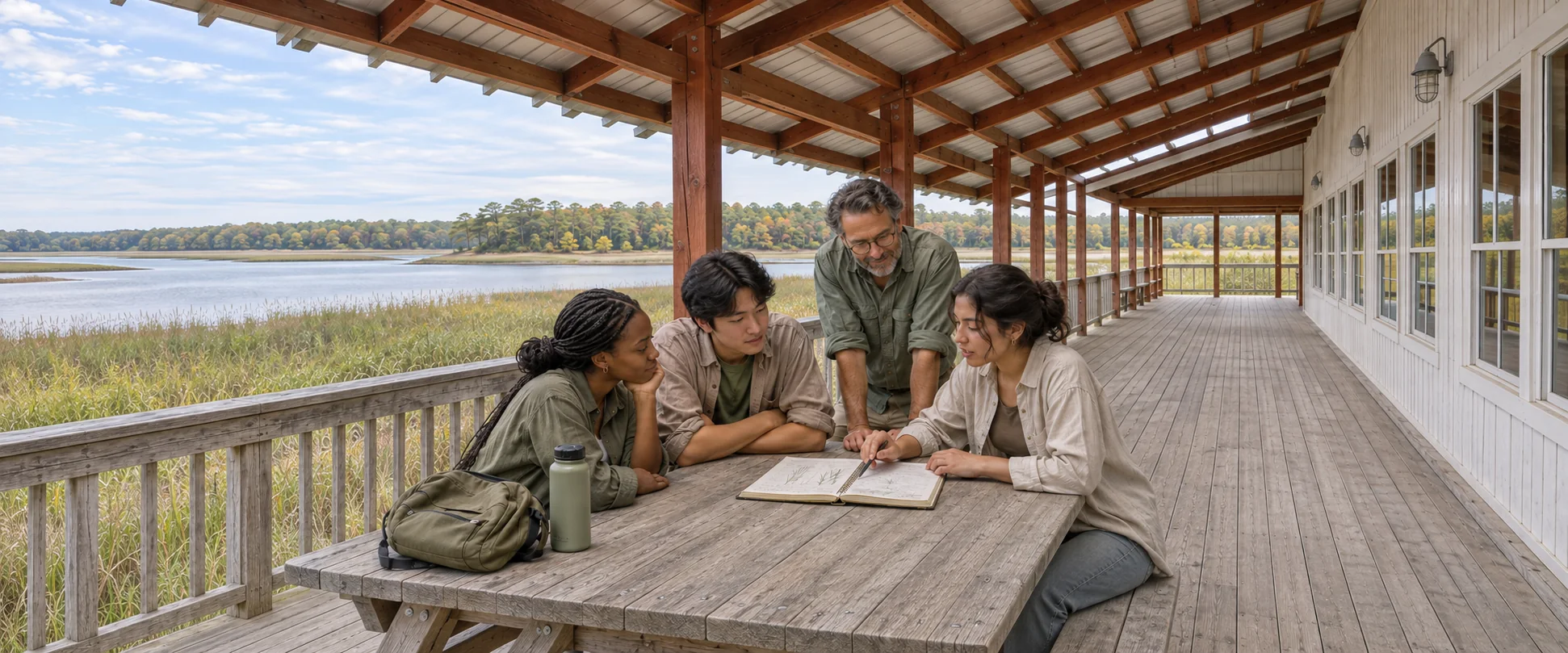
Adult students reviewing a notebook on the sheltered deck of the fictional Reedwater teaching station
Reedwater Field Station / A question begins with a closer look.Illustrative fictional campus scene

Learn where land meets water.

A specimen. A map. A story about a place.
At Ternhaven, learn to connect the question you ask with the evidence behind your answer.

Find your direction
8Undergraduate programs / four BS, four BA
2,120Students in a focused undergraduate college
46Acres of main campus, plus a separate field station
1972A history of learning through observation

Start with a question

One coast.
Different ways to understand it.

Study living systems, read a place through maps, or ask how a community explains its past and plans its future. A shared foundation connects eight programs while keeping their methods distinct.

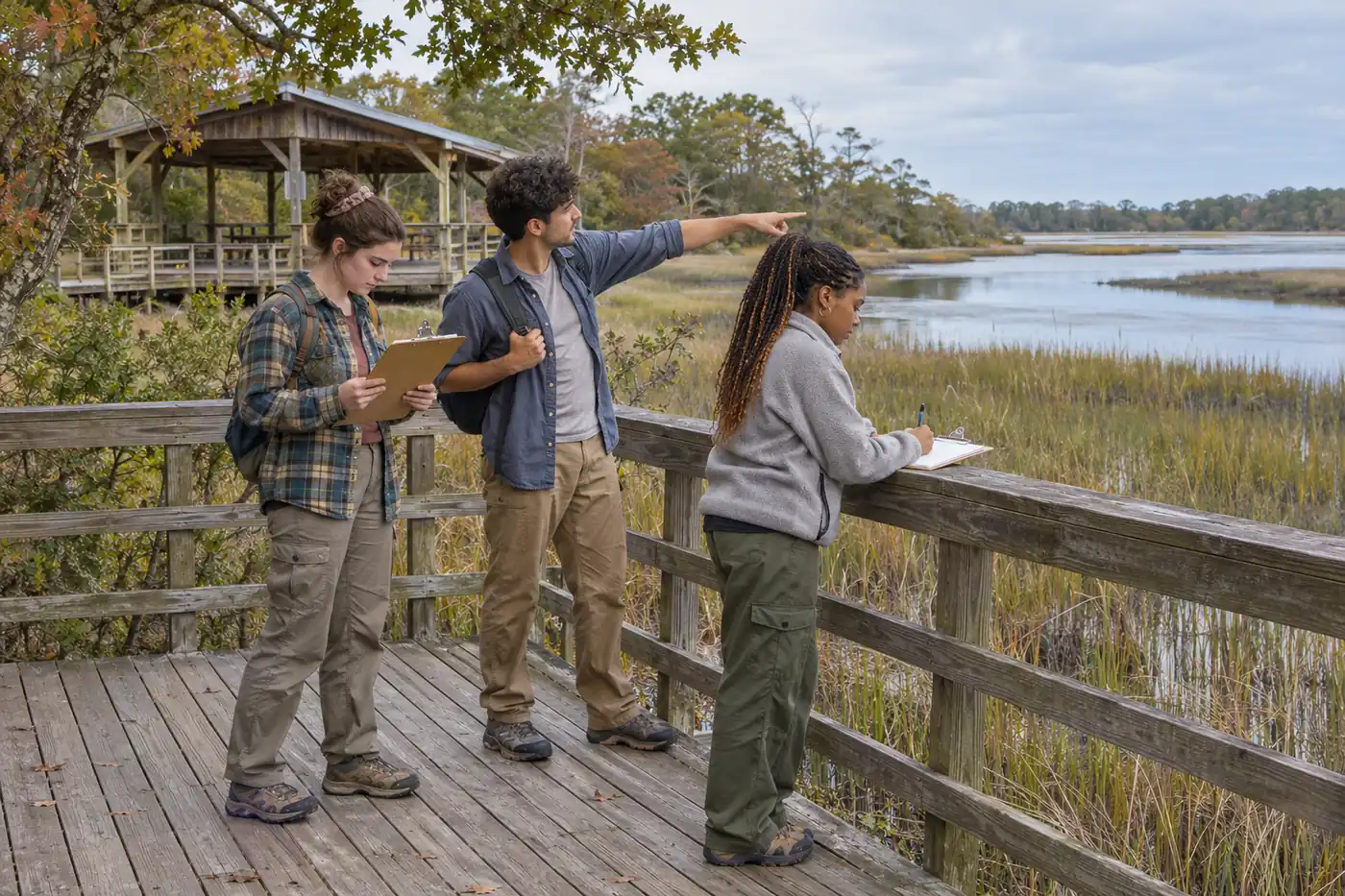
Three adult students recording a shore-based observation from the level Reedwater platform with marsh and pavilion in view

01 / Marine & Environmental Sciences

What does the record reveal?

Learn through organism observations, estuary comparisons and supervised analytical records.

Inside Estuary Ecology
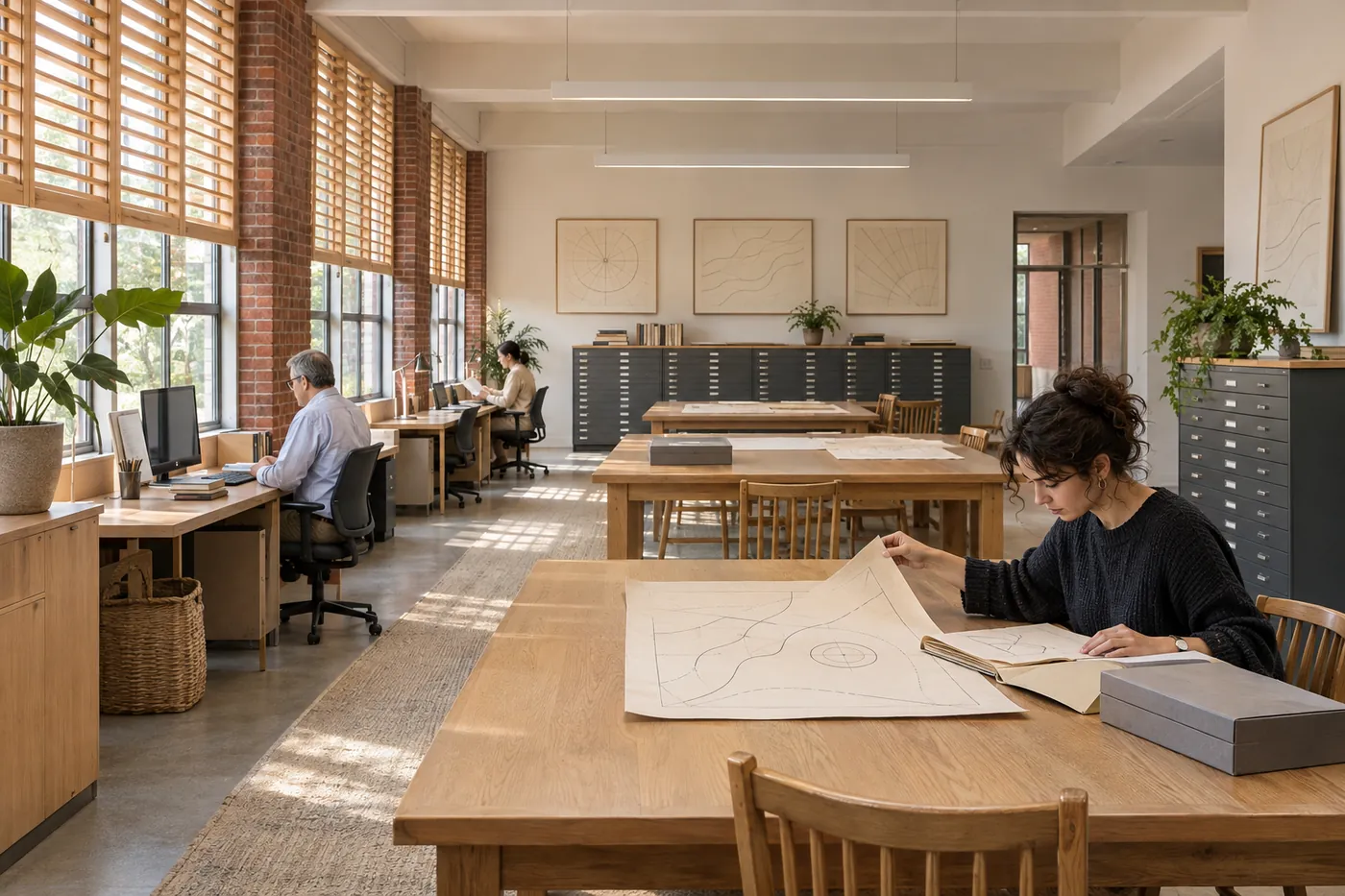
Chart Room in the fictional college, showing gis, map reading, spatial sources and student atlas review

02 / Spatial & Coastal Systems

What belongs on the map?

Compare sources, scales and planning options, making dates and unresolved questions visible.

Explore the programs
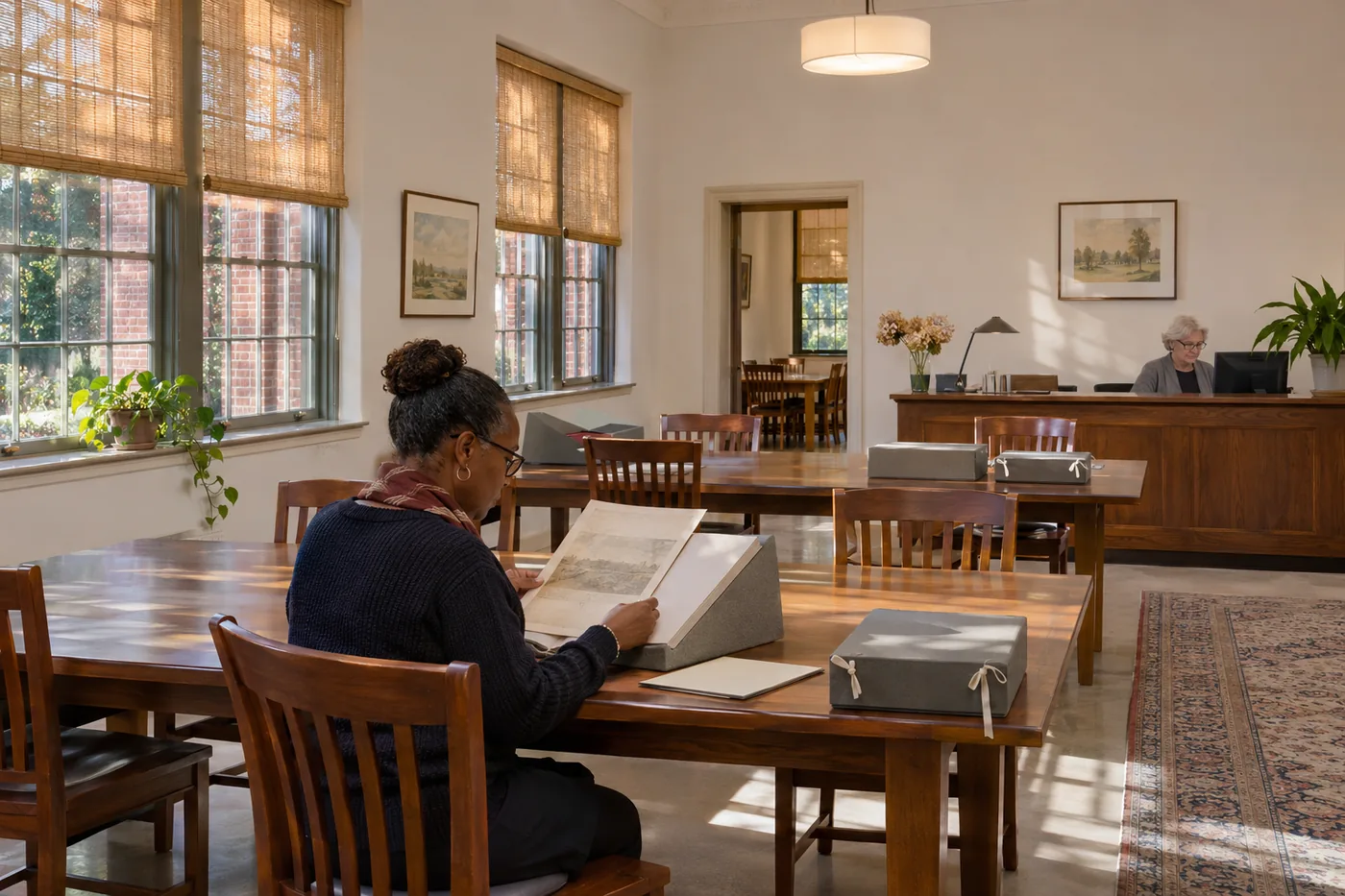
Harbor Archive in the fictional college, showing original simulated teaching collections, historical interpretation and source comparison

03 / Coastal Communities & Communication

Whose account are we reading?

Work with historical sources, environmental explanations and the practical choices behind a visit.

Explore the programs

A method takes practice

Begin with what you can describe.

Discover field learning
01

Observe

Define the time, place and viewpoint. Learn what your chosen observation can make visible.

02

Record

Keep the source, identifier and units with the result. A later correction should leave a readable trail.

03

Question

Compare possible explanations. Decide which next record would help, and which claim is still too large.

04

Explain

Share a clear account with its limits intact. A useful finding can begin another question.

Field Notes / Student inquiries

A finding is part of the story.

Look at the choices, revisions and records behind a student project. These original classroom scenarios make a learning process visible.

04 / Spatial sources

Shoreline in Four Layers

Aiden Cho asks whether a reader can see different source dates and missing coverage in a convincing-looking map. The teaching diagram is schematic, with no real coordinates.

07 / Audience adaptation

A Chart for Two Audiences

Grace Lin changes the route into an explanation while keeping the same invented values, dates, units and qualification in both versions. A shorter caption still needs a source.

Programs and study

Choose the question.
Develop the practice.

Eight four-year degrees. A complete 120-credit route, a shared foundation and a final project with a method you can explain.

Read about academic preparation
Marine BiologyBS

Learn to describe marine organisms in context and connect a biological question to observations that can be checked.

A bounded biological observation study with a specimen or image record, contextual sources and a critical account of its limits.

120 credits · Annual course resource fee $980; personal books and supplies allowance $1,800.

Understand the preparation
Read the complete degree route
Estuary EcologyBS

Study variation across an estuary through repeatable observations, sample records and comparisons made at a defined scale.

A comparative estuary study with aligned observation records, a checked dataset and a methods-and-limits presentation.

120 credits · Annual course resource fee $980; personal books and supplies allowance $1,800.

Explore the full Estuary Ecology program
Read the complete degree route
Water & Environmental ChemistryBS

Connect foundational chemistry and supervised analysis to sample identity, quality records and appropriately limited interpretation.

A teaching water-analysis study with calibration and quality-control records, interpreted results and a method review.

120 credits · Annual course resource fee $980; personal books and supplies allowance $1,800.

Understand the preparation
Read the complete degree route
Geospatial & Coastal ObservationBS

Build spatial accounts of coastal places with clear sources, consistent scales and an honest view of missing information.

A coastal observation atlas with documented layers, reproducible map choices and a clear uncertainty statement.

120 credits · Annual course resource fee $680; personal books and supplies allowance $1,500.

Understand the preparation
Read the complete degree route
Coastal Planning & PolicyBA

Compare how coastal places are used and governed through public documents, realistic options and clearly stated tradeoffs.

A coastal planning options brief with source evidence, stakeholder perspectives, resource assumptions and an implementation boundary.

120 credits · Annual course resource fee $420; personal books and supplies allowance $1,200.

Understand the preparation
Read the complete degree route
Coastal Public HistoryBA

Develop accounts of coastal places through careful source comparison, attribution and interpretation for a public reader.

An original public-history interpretation using a clearly identified teaching collection, source notes and a documented editorial review.

120 credits · Annual course resource fee $420; personal books and supplies allowance $1,200.

Understand the preparation
Read the complete degree route
Environmental CommunicationBA

Explain environmental questions for different readers while keeping evidence, context and uncertainty attached to the message.

A coherent communication project with a source dossier, two audience versions and a reasoned account of testing and revision.

120 credits · Annual course resource fee $420; personal books and supplies allowance $1,200.

Understand the preparation
Read the complete degree route
Sustainable Coastal TourismBA

Study how people visit coastal places through interpretation, practical operations and explicit environmental and community considerations.

A visitor-use proposal with a defined setting, route, operating assumptions, interpretation and an impact-limits review.

120 credits · Annual course resource fee $420; personal books and supplies allowance $1,200.

Understand the preparation
Read the complete degree route

Beyond the field notebook

A base for the day.
Room for the rest of life.

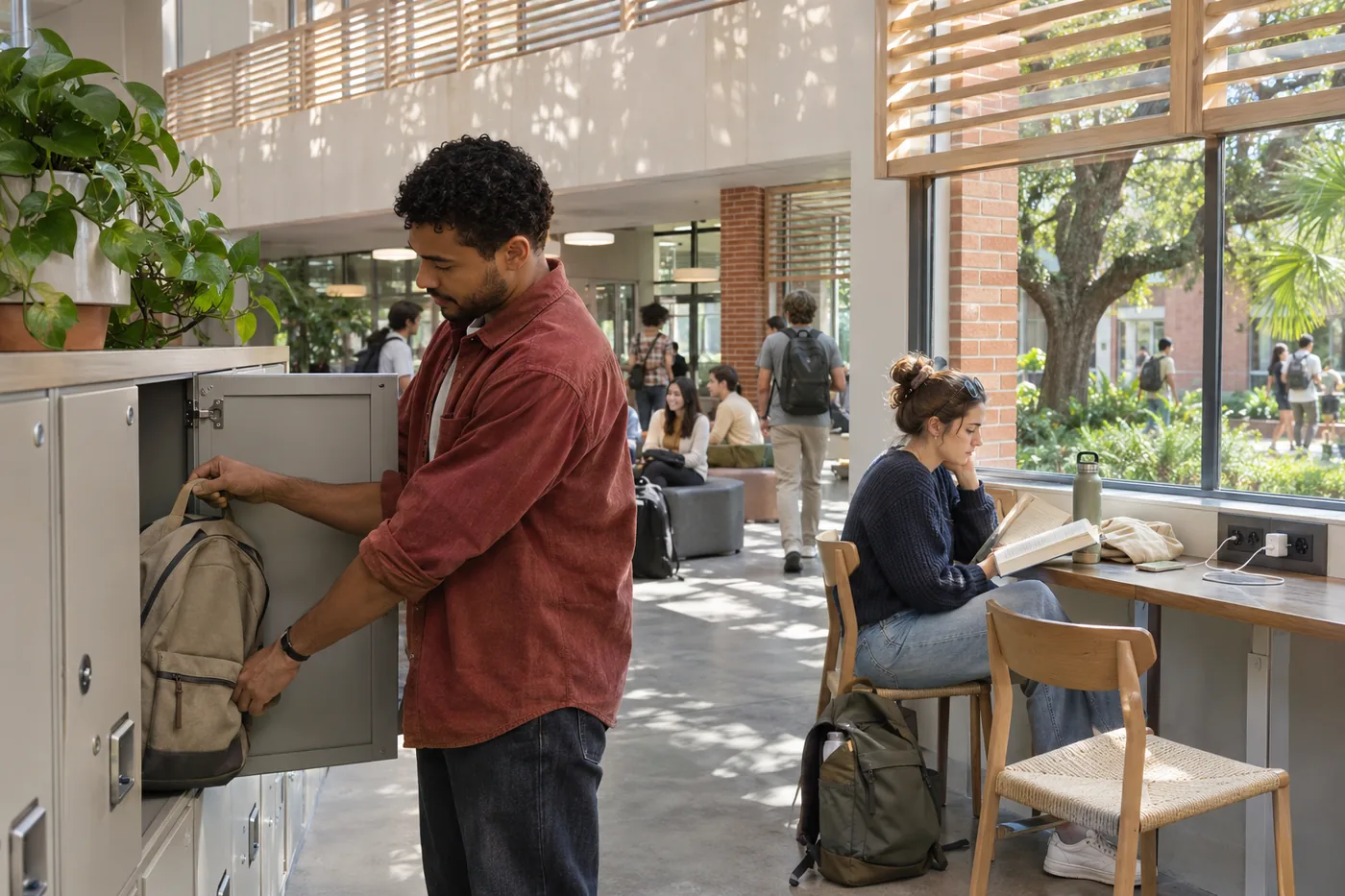
Set down a bag, find a quiet table and plan the time between classes. Commons connects day lockers, meals and a practical point of contact for commuter students.

Make a campus day work
An adult commuter placing an ordinary backpack into a Commons day locker beside a quiet study area
Commons at the Reach / An ordinary base between classes.

Notes from the college

Work worth a closer look.

2026-11-09 / ADMISSIONS

Fall 2027 conversations begin with an academic question

Read the story +

By Priya Lawson

Ternhaven’s Fall 2027 academic preparation conversations will begin on November 16. Applicants can start with a question they have encountered in a class, a piece of reading or an ordinary observation and explain why they would like to study it further. The conversation is intended to clarify program preparation and the application process, not require an already completed research project.

Admissions asks for a secondary-school completion record or current final-year record and a short academic-interest statement alongside the applicant’s intended program and contact information. Transfer applicants also prepare college transcripts and course descriptions for a separate equivalence review. A title that resembles a Ternhaven course does not by itself determine how many credits will be accepted.

The four science degrees recommend mathematics and laboratory-science preparation. Applicants missing part of that background can discuss a realistic study plan with an adviser; the local preparation tool does not decide admission or promise a particular outcome. The four BA degrees also use quantitative reasoning in the shared curriculum while developing different subject methods in planning, history, communication and tourism.

Director of Admissions Priya Lawson has encouraged applicants to read an actual program route before selecting examples for the statement. A question about a sample record may lead toward chemistry, ecology or communication depending on what the student wants to understand. Those connections are useful, but they do not erase the distinct courses, assessment tasks and final projects of the eight programs.

First-year and institutional award priority materials are due February 15, 2027, with a separate transfer priority of March 15. Priority decisions begin March 25 and the priority reply date is May 1. Dates use Eastern Time; the website’s checklist is a preparation aid only. Saving it does not deliver records, reserve a conversation or create an application in an admissions system.

Applicants can use the Academic Preparation and How to Apply pages to organize questions before contacting the example office. International records require original-language documents, complete English translations and a grading-scale explanation. The institution and its contacts are fictional, and the static site neither receives private documents nor issues immigration paperwork. Current program costs and award assumptions are described separately in Tuition and Planning.

2026-11-04 / CAMPUS SERVICES

A return handover keeps the next class’s equipment record clear

Read the story +

By Evan Brooks

Reedwater Field Station has introduced a short teaching handover review at the end of scheduled course sessions. Students return shared items to the responsible staff member with the item identifier, agreed due time and a note about its condition. The change responds to a familiar classroom problem: an object can be back in its place while its record still leaves the next group uncertain.

The handover uses the existing course loan process rather than a new online reservation system. Equipment is allocated after the relevant induction and according to the confirmed teaching plan. The website does not show a live inventory, accept independent station bookings or issue permission to use a device. A local checklist can help a student prepare questions but cannot replace staff agreement.

Field Learning Coordinator Evan Brooks has asked groups to keep an unresolved return question visible instead of assuming that the next class will recognize it. A clear record can distinguish an ordinary observation about condition from a fault that needs staff review. Students should not attempt an unapproved repair or treat a missing note as proof that an item is ready for every use.

The same discussion extends to digital records. A folder copied to the next student does not explain which file is original, which has been edited or why an entry was corrected. Course exercises therefore keep a source register and a concise change log beside the working material. Restricted or personal information belongs in an agreed course location, not an automatically shared public example.

Staff-confirmed changes may move a session indoors or replace one activity with a supplied-record task that addresses the learning aim. The handover record then notes the actual activity and material used. It does not imply that a scheduled field visit occurred when the course used another method, a distinction that matters when students later describe their project process.

Students should contact the Field Learning Office about station access and the Equipment and Data Desk about ordinary course loans and return times. The two services have different locations and hours. The updated Equipment and Data Care page explains the shared principles and directs queries to the responsible desk. It does not introduce an automatic fine, replacement charge or claim of real-time equipment availability.

Events and conversations

Bring another question.

DEC04

Chart Room Open Session

A guided session uses original schematic teaching layers to compare the work done by a source map, a layer register and a final atlas page. Visitors can ask about the curriculum and observe a demonstration, but the event does not authorize equipment loans, grant access to restricted files or provide maps suitable for navigation.

Free, in-person attendance within the stated room capacity. No online ticket, registration or seat reservation is provided. Contact the host to discuss access or group arrival before the event.

Host: Jonah Kim · 30 places by room capacity.

2026-12-04 · 14:00–16:00 ET · Chart Room

DEC10

Coastal History Reading

Public-history students compare original classroom documents about a fictional reading room. The session makes the difference between quotation, paraphrase and interpretation visible and does not present invented testimony as the speech of real residents. No real local discovery, historical collection or outside institutional partnership is claimed.

Free, in-person attendance within the stated room capacity. No online ticket, registration or seat reservation is provided. Contact the host to discuss access or group arrival before the event.

Host: Rafael Ortiz · 36 places by room capacity.

2026-12-10 · 18:00–19:15 ET · Harbor Archive

JAN23

Winter Campus Visit

The winter visit is a special main-campus event outside the ordinary Tuesday and Friday visit pattern. The route includes Commons, Lantern Library and a scheduled Chart Room introduction; it does not include independent access to Reedwater Field Station, a boat trip or entry to an active laboratory session.

Free, in-person attendance within the stated room capacity. No online ticket, registration or seat reservation is provided. Contact the host to discuss access or group arrival before the event.

Host: Priya Lawson · 60 places by room capacity.

2027-01-23 · 10:00–13:00 ET · Reach Hall

APR16

Spring Research Forum

Senior students present studies, planning briefs, atlas spreads and interpretation projects. Each account identifies its sources and the boundary between classroom simulation and real evidence. The forum is a learning presentation, not publication of a government monitoring result, an adopted public plan or a certified analytical service.

Free, in-person attendance within the stated room capacity. No online ticket, registration or seat reservation is provided. Contact the host to discuss access or group arrival before the event.

Host: Dr. Owen Salcedo · 90 places by room capacity.

2027-04-16 · 13:00–16:30 ET · Commons at the Reach

2027–28 / Tuition and planning

A clearer plan for the year ahead.

See tuition, course resources and daily living together. Then choose a program and living situation to build a budget with its assumptions in view.

Build an annual estimate
Annual tuition$31,600
Required annual fee$980
Course resource fee$420–$980
Academic Development Awards$5,000–$13,000

Room, meals and personal expenses are separate. Awards require a separate review; the planner shows an assumption.

Come with a question

Find your way to Ternhaven.

Ordinary main-campus visits take place Tuesdays and Fridays, 10:00–11:30 ET during teaching weeks, after staff confirmation. The Winter Campus Visit is January 23, 2027, 10:00–13:00 ET.

Keep a visit intention.

Choose a possible date and save a note on this device. Staff confirmation is required.

Admissions

Priya Lawson

RH 101 · Reach Hall

Mon–Fri 09:00–17:00 ET

+1 (910) 555-0142
[email protected]

Student Support

Nia Thornton

RH 107 · Reach Hall

Mon–Fri 09:00–17:00 ET

+1 (910) 555-0163
[email protected]

Arrival: Reach Hall reception. The campus address and contacts are illustrative. Reedwater Field Station is a separate course location; a campus visit plan does not arrange station access.

Privacy and local planning

Search, calculations and planning tools run on this device. They do not send an application, message or payment. A draft remains in memory until you download it; no personal draft is saved automatically. Keep private records outside these tools.

Access to this website

Use the keyboard, skip link, visible focus and readable page content. Tables stay in their own containers. Main links remain available without scripts. Student Support can discuss learning-access questions separately.

Find a place to begin.